Spin to Win: Understanding the Allure and Nuances of the Roulette Game
The roulette game, a staple in casinos worldwide, is more than just a spinning wheel and a bouncing ball. It’s a game of chance steeped in history, strategy, and a dash of superstition. From the glitzy casinos of Monte Carlo to the convenience of online platforms, the roulette game continues to captivate players with its simple rules and the potential for significant payouts. This article delves into the intricacies of the roulette game, exploring its origins, rules, variations, strategies, and the psychological factors that contribute to its enduring popularity.
A Brief History of Roulette
The origins of the roulette game can be traced back to 18th-century France. Blaise Pascal, a French mathematician, is often credited with inventing a primitive form of roulette in his search for a perpetual motion machine. However, the modern roulette game, as we know it, emerged from a combination of various gambling games, including the Italian game Biribi and the English game Roly-Poly. By the late 1790s, roulette games were being played in Paris casinos. The introduction of the single “0” roulette wheel is attributed to the Blanc brothers, who used it to give the casino a lower house edge, making the game more attractive to players. The roulette game quickly spread throughout Europe and eventually made its way to America.
The Rules of the Roulette Game: A Simple Overview
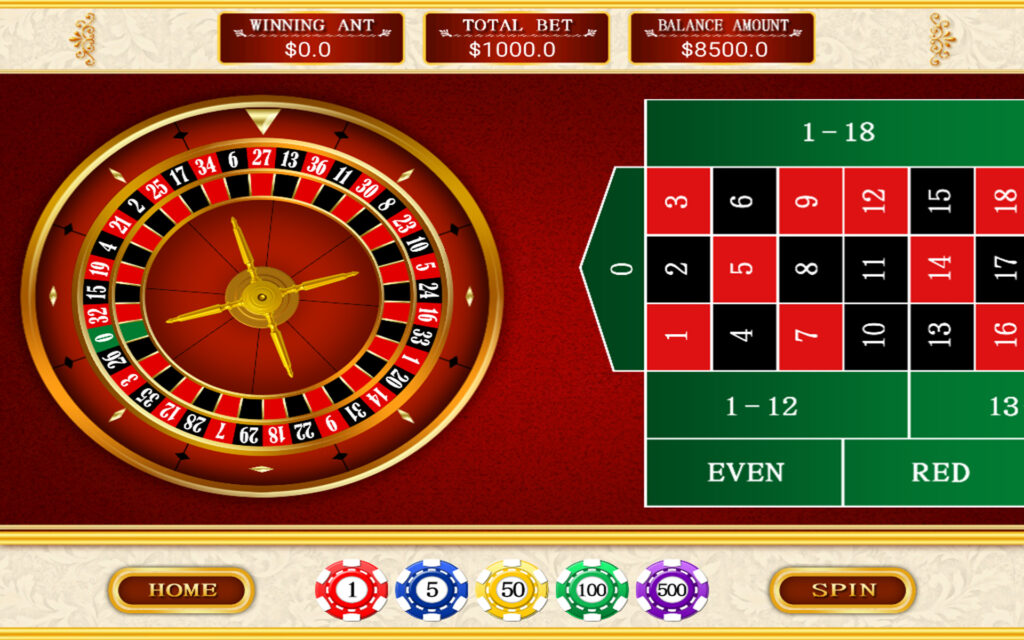
The basic rules of the roulette game are relatively straightforward. A roulette wheel, featuring numbered pockets ranging from 0 (and 00 in American roulette) to 36, is spun in one direction. A small ball is then spun in the opposite direction around the inner rim of the wheel. Players place bets on where they think the ball will land. These bets can be placed on individual numbers, groups of numbers, colors (red or black), or whether the number will be odd or even. Once the ball comes to rest in a numbered pocket, the winning number is announced, and payouts are made to those who placed successful bets.
Understanding the Roulette Wheel Layout
The layout of the roulette wheel is not random. The numbers are arranged in a specific order to ensure a balance between high and low numbers, as well as odd and even numbers. The arrangement also alternates between red and black pockets. There are two main types of roulette wheels: the European roulette wheel, which has a single “0”, and the American roulette wheel, which has both a “0” and a “00”. The presence of the “00” in American roulette increases the house edge, making the European version more favorable for players.
Types of Bets in Roulette
The roulette game offers a variety of betting options, each with its own odds and payout. These bets can be broadly categorized into inside bets and outside bets.
Inside Bets
Inside bets are placed on specific numbers or small groups of numbers. These bets offer higher payouts but have lower odds of winning. Common inside bets include:
- Straight Up: A bet on a single number.
- Split Bet: A bet on two adjacent numbers.
- Street Bet: A bet on three numbers in a row.
- Corner Bet: A bet on four numbers that form a square.
- Line Bet: A bet on six numbers in two adjacent rows.
Outside Bets
Outside bets are placed on larger groups of numbers or characteristics of the numbers. These bets offer lower payouts but have higher odds of winning. Common outside bets include:
- Color Bet: A bet on whether the winning number will be red or black.
- Odd/Even Bet: A bet on whether the winning number will be odd or even.
- High/Low Bet: A bet on whether the winning number will be high (19-36) or low (1-18).
- Column Bet: A bet on one of the three vertical columns of numbers.
- Dozen Bet: A bet on one of the three groups of twelve numbers (1-12, 13-24, 25-36).
Roulette Variations: European, American, and French
While the basic principles of the roulette game remain the same, there are several variations that players should be aware of. The most common variations are European roulette, American roulette, and French roulette.
European Roulette
European roulette features a single “0” on the wheel, giving it a lower house edge of 2.7%. This makes it a more favorable option for players compared to American roulette. The standard betting options are available.
American Roulette
American roulette features both a “0” and a “00” on the wheel, increasing the house edge to 5.26%. While the basic gameplay is the same, the higher house edge makes it a less attractive option for experienced players. Some casinos offer a “five-number bet” which covers 0, 00, 1, 2 and 3, but it has a very high house edge.
French Roulette
French roulette is similar to European roulette, with a single “0” on the wheel. However, it often includes two additional rules that can benefit players: “La Partage” and “En Prison”.
- La Partage: If the ball lands on “0”, players who have placed even-money bets (red/black, odd/even, high/low) receive half of their bet back.
- En Prison: If the ball lands on “0”, players can choose to leave their even-money bet “in prison” for the next spin. If the bet wins on the next spin, the player gets their original stake back; if it loses, the bet is forfeited.
Strategies for Playing Roulette
While the roulette game is ultimately a game of chance, many players employ strategies in an attempt to improve their odds or manage their bankroll. It’s important to remember that no strategy can guarantee a win in the long run, as the house always has an edge. However, some strategies can help players to make more informed decisions and potentially minimize their losses.
The Martingale System
The Martingale system is a popular betting strategy that involves doubling your bet after each loss. The idea is that when you eventually win, you will recover all of your previous losses plus a small profit. However, this system can be risky, as it requires a large bankroll and can quickly lead to significant losses if you experience a long losing streak. [See also: Responsible Gambling Tips]
The Fibonacci System
The Fibonacci system is a betting strategy based on the Fibonacci sequence (1, 1, 2, 3, 5, 8, 13, etc.). Players increase their bets according to the sequence after each loss and decrease their bets after each win. This system is less aggressive than the Martingale system but still requires careful bankroll management.
The D’Alembert System
The D’Alembert system is a betting strategy that involves increasing your bet by one unit after each loss and decreasing your bet by one unit after each win. This system is considered to be less risky than the Martingale and Fibonacci systems.
Bankroll Management
Perhaps the most important strategy for playing the roulette game is effective bankroll management. This involves setting a budget for your gambling activities and sticking to it. It also means knowing when to stop playing, whether you are winning or losing. Avoid chasing losses and never bet more than you can afford to lose. Responsible gambling is crucial for a positive and enjoyable experience. [See also: Understanding Odds in Casino Games]
The Psychology of Roulette
The roulette game is not just about numbers and probabilities; it’s also about psychology. The spinning wheel, the bouncing ball, and the anticipation of the outcome create a sense of excitement and suspense that can be highly addictive. Many players are drawn to the roulette game because of its simplicity and the perceived control they have over the outcome. However, it’s important to remember that the roulette game is ultimately a game of chance, and the house always has an edge. Understanding the psychological factors that influence your gambling behavior can help you to make more rational decisions and avoid falling into the trap of chasing losses. [See also: The Thrill of Online Casino Games]
Online Roulette: Convenience and Accessibility
The advent of online casinos has made the roulette game more accessible than ever before. Players can now enjoy the thrill of the roulette game from the comfort of their own homes, at any time of day or night. Online roulette offers a wide variety of betting options and game variations, as well as the convenience of playing on a desktop or mobile device. However, it’s important to choose a reputable and licensed online casino to ensure a fair and secure gaming experience. [See also: How to Choose a Reputable Online Casino]
Conclusion: The Enduring Appeal of the Roulette Game
The roulette game continues to be a popular choice for casino players around the world. Its simple rules, variety of betting options, and the potential for significant payouts make it an attractive game for both novice and experienced gamblers. While the roulette game is ultimately a game of chance, understanding the rules, variations, and strategies can help players to make more informed decisions and manage their bankroll effectively. Remember to gamble responsibly and enjoy the thrill of the spin!
